
AC Repair & Maintenance in Dubai for Beating the Desert Heat
Living in Dubai is a masterclass in modern comfort. We have world class architecture, pristine beaches, and a vibrant cosmopolitan lifestyle. But let’s be honest: none of it works without air conditioning.
When the summer ambient temperature glides past 45°C (113°F) with humidity levels that make the air feel thick enough to chew, your AC ceases to be an appliance. It is a critical, life sustaining utility.
Yet, for many palm Jumeirah Dubai residents, the indoor cooling system remains a total mystery until it stops working. Suddenly, you find yourself sweating in your living room, frantically typing keywords into your phone, trying to decipher the difference between a quick filter rinse and a catastrophic compressor failure.
This comprehensive guide is designed to take the guesswork out of managing your indoor climate. Whether you are dealing with an emergency breakdown, looking to slash your DEWA (Dubai Electricity and Water Authority) bill, or trying to eliminate that mysterious musty smell in your apartment, here is everything you need to know about navigating the world of AC repair, maintenance and cleaning in Dubai.
1. AC Repair Dubai: Navigating the Emergency Breakdown
There is a distinct timeline of panic when an AC unit fails in the dead of a Dubai summer.
- Minute 1: “Is it just me, or is it getting a bit warm in here?”
- Minute 10: You check the thermostat. It’s set to 22°C, but the ambient reading says 27°C.
- Minute 30: The walls begin to radiate trapped heat, the humidity spikes, and your home officially transforms into a sauna.
When an unexpected breakdown occurs, you are dealing with a highly transactional emergency. You don’t need a lecture on preventative care; you need an experienced technician at your doorstep with a tool bag, fast. This is where understanding AC Repair Dubai protocols becomes essential.
AC Emergency in Dubai: Common Causes & How to Fix Them
Before you panic-call the first number you see online, it helps to understand what usually goes wrong when a system completely shuts down or blows warm air:
- Capacitor Failure: Think of the capacitor as the electrical cheerleader that gives your AC motor the initial push it needs to start running. Dubai’s relentless heat forces AC units to cycle on and off constantly. This intense electrical load frequently burns out capacitors, leading to a system that hums but refuses to blow cold air.
- Refrigerant Leaks: Your system relies on a chemical refrigerant (commonly R-410A or R-22) to absorb heat from indoor air and dump it outside. If a vibration creates a tiny pinhole leak in the copper coils, the refrigerant level drops. Your AC will run continuously, but it will lose its ability to cool.
- Compressor Failure: The compressor is the literal heart of your air conditioning system. It pumps the refrigerant through the coils. Because units in the UAE run for thousands of hours per year without a break, unmaintained compressors can seize up due to overheating or lack of lubrication. This is typically the most expensive repair on any unit.
- Fan Motor Burnout: Both your indoor blower fan and outdoor condenser fan work incredibly hard. If dirt builds up or bearings wear out, the motors will overheat and shut down, halting all airflow.
AC Troubleshooting Checklist: What to Check Before Calling a Professional in Dubai
Sometimes, a terrifying “breakdown” is actually a simple fix. Check these three things before booking an emergency technician:
- The Thermostat Batteries: If your thermostat screen is blank, the system won’t turn on. Replace the batteries first.
- The Circuit Breaker: Head to your home’s electrical panel. AC units draw massive amounts of power, and a sudden surge can trip the breaker. Flip it completely off, then back on.
- The Isolator Switch: If you live in a villa, check the big weatherproof switch located next to your outdoor condenser unit. Ensure it hasn’t been accidentally flipped to the “off” position during patio cleaning.
If these items are fine and your home is steadily heating up, it’s time to call in a professional emergency repair service. Look for companies that explicitly offer 24/7 rapid response, clear diagnostic fee structures, and warranties on replaced parts.
2. AC Not Cooling: Troubleshooting the Symptoms
Sometimes, your AC doesn’t completely die; instead, it enters a state of sluggish underperformance. You feel air coming out of the vents, but it lacks that crisp, icy bite. The technical symptom AC Not Cooling is one of the most frequent complaints registered by Dubai tenants and homeowners.
Understanding why your system is failing to meet your thermostat demands can save you days of discomfort and prevent minor issues from cascading into irreparable damage.
The Top 4 Reasons Your AC Has Lost Its Cooling Power
I. Choked Air Filters
This is the single most common cause of cooling degradation. When an air filter is caked in dust, pet dander, and fibers, it restricts airflow. Air cannot pass efficiently over the evaporator coils, causing the temperature of those coils to drop below freezing. Paradoxically, a dirty filter can cause your AC unit to freeze into a literal block of ice, blocking all air from entering your rooms.
II. Dirty Outdoor Condenser Coils
If you live in a villa, your outdoor unit sits exposed to the harsh elements. Dust, sand, and windborne debris coat the condenser coils like a thick blanket. Because the outdoor unit’s job is to release the heat extracted from your home into the outside air, a layer of dirt acts as an insulator. The heat stays trapped in the system, and your indoor air remains lukewarm.
III. Faulty Thermostat Calibration
Your thermostat is the brain of your HVAC (Heating, Ventilation, and Air Conditioning) system. If its internal sensors fail, or if it is mounted directly in the path of sunlight or drafty areas, it will misread the actual temperature of your home. It might shut off the compressor long before the room has actually reached your desired level of comfort.
IV. Frozen Evaporator Coils
If you notice a pool of water dripping from your indoor ceiling unit or see actual ice forming on the copper piping, your evaporator coils have frozen over. This is usually caused by either a severe restriction in airflow (dirty filters) or low refrigerant levels.
Critical Warning: If you see ice forming on your AC unit, turn it off immediately at the thermostat. Running an AC with frozen coils can cause liquid refrigerant to flood back into the compressor, destroying it instantly. Let the system thaw completely before a technician arrives.
3. AC Maintenance Dubai: The Power of Preventative Care
If emergency repair is the cure, preventative maintenance is the vaccine.
Many residents view AC Maintenance Dubai as an optional luxury or an unnecessary expense. This mindset is an expensive mistake. In a climate where cooling systems operate at maximum capacity for eight to nine months of the year, skipping regular maintenance is the financial equivalent of driving a car 50,000 kilometers without ever changing the oil.
Regular Maintenance ➔ Lower DEWA Bills + Longer Equipment Life + Fewer Emergency Breakdowns
What Happens During a Professional AC Service Check-up?
A comprehensive, professional maintenance visit goes far beyond washing a plastic filter in your bathroom sink. A certified HVAC technician will perform a multi-point inspection and tune-up, which should ideally include:
- Electrical Diagnostics: Checking electrical connections, measuring amperage draw on the motor and compressor, and testing capacitor health to prevent unexpected electrical failures.
- Refrigerant Pressure Monitoring: Verifying that your system has the exact right amount of gas. Too little gas indicates a dangerous leak; too much gas strains the compressor.
- Drain Line Flushing: Algae, dust, and sludge accumulate rapidly in the condensate drain line. Technicians flush these lines with pressurized water or specialized clearance tools to prevent water from backing up and leaking through your ceiling.
- Mechanical Lubrication: Oiling moving parts like fan bearings to reduce friction, eliminate squeaking noises, and lower power consumption.
The Financial Case for Annual Maintenance Contracts (AMCs)
For long-term peace of mind, many residents choose to sign an Annual Maintenance Contract (AMC). Instead of paying for individual callouts, an AMC typically covers two to four scheduled preventative maintenance visits per year, alongside 24/7 emergency callout support.
| Maintenance Strategy | Upfront Cost | Emergency Coverage | Long-Term Equipment Health |
| Reactive (Call when broken) | Zero | High emergency call-out fees | Poor; shorter equipment lifespan |
| Individual Booking (Seasonal) | Moderate | Standard rates; subject to peak-season delays | Fair to Good; covers major seasons |
| Annual Maintenance Contract | Fixed Annual Fee | Often free or heavily discounted; priority booking | Excellent; continuous monitoring |
Investing in a maintenance contract not only protects your wallet from sudden, expensive component failures but also keeps your system operating at peak efficiency, which drastically slashes your monthly DEWA electricity bills.
4. AC Cleaning & Duct Cleaning Dubai: Breathing Clean Air
In Dubai, we spend roughly 80% to 90% of our summer days indoors. This means the air inside your apartment or villa is cycled through your AC system over and over again. Now combine this with Dubai’s natural environment: frequent sandstorms, high ambient humidity, and fine desert dust.
Over time, this dust bypasses basic filters and settles inside your unit’s internal dark components. When cold air mixes with moisture on these dusty surfaces, it creates the ultimate breeding ground for mold, fungi, and bacterial colonies. This makes AC Cleaning Dubai and AC Duct Cleaning Dubai absolutely non-negotiable for healthy indoor living.
Signs Your AC System Needs Urgent Deep Cleaning
Your system will usually give you subtle clues when it has become a hotbed for dust and biological growth:
- The “Dirty Sock” Smell: If you experience a sharp, musty, or sour odor the moment your AC turns on, you are smelling active mold growth inside the evaporator coils or drainage tray.
- Visible Black Spots on Vents: Look up at your supply vents. If you see black streaks or small dark spots forming on the louvers, mold spores are traveling through your ductwork and settling on the grilles.
- Unexplained Allergy Flare-ups: If you, your children, or your pets experience chronic sneezing, dry eyes, morning congestion, or asthma flare-ups only when you are at home, poor indoor air quality is the likely trigger.
- Weak Airflow: Even if the fan is running at maximum speed, if the air feels like a weak whisper rather than a strong breeze, your internal cooling coils are likely choked with an accumulation of dust.
The Difference Between Standard Cleaning and Deep Duct Sanitization
It is important to understand what you are paying for when booking a cleaning service:
- Standard Service Cleaning: This involves washing the removable mesh filters, wiping down the external grill, and clearing the immediate drain pan. It’s a surface-level clean perfect for regular quarterly touch-ups.
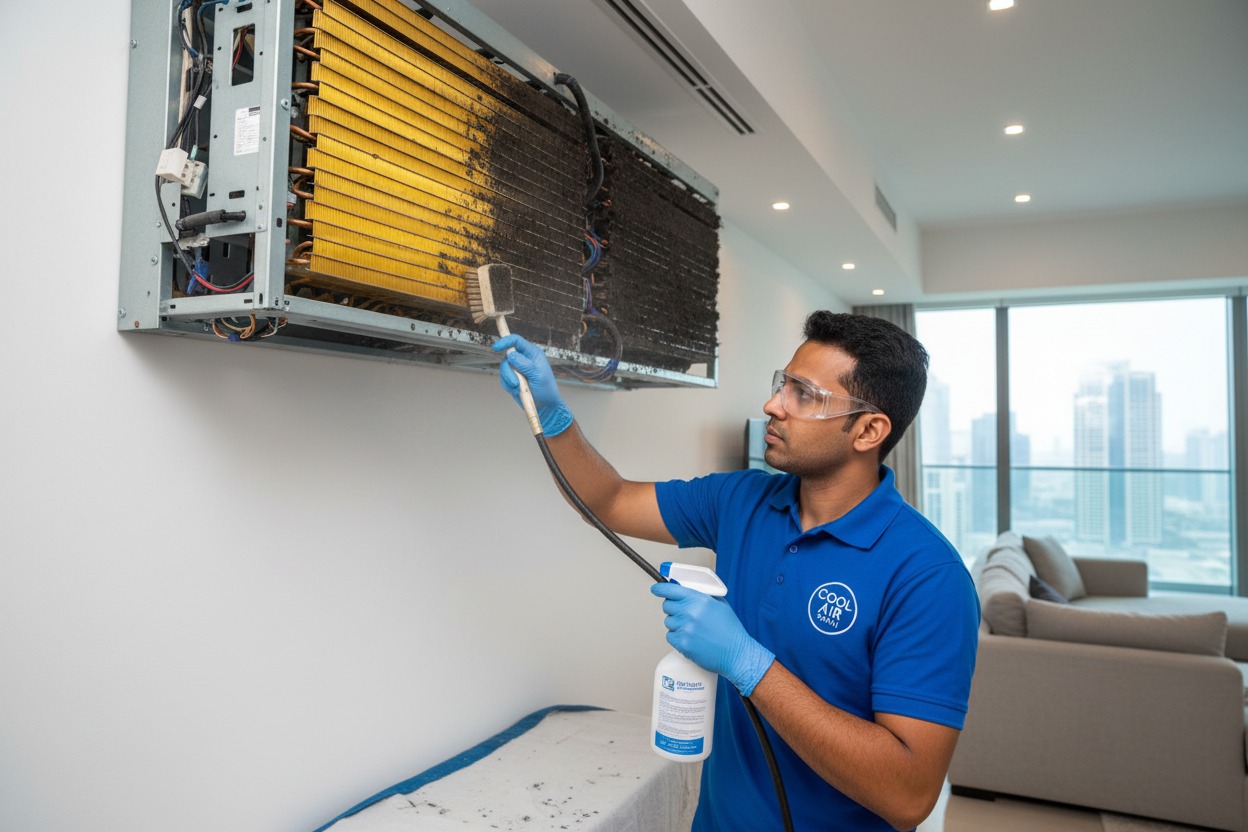
- Deep AC Cleaning: The technician takes down the indoor unit’s cover, exposes the evaporator coil, and applies a specialized, biodegradable coil cleaner to dissolve deeply embedded grime. They also scrub the cylindrical blower fan (the piece responsible for pushing air into your home).
- Duct Cleaning & Sanitization: This is a comprehensive, whole-home medical-grade cleaning process. Technicians use specialized rotobrush machines with long, flexible vacuums to scrape decades of dust out of the hidden metallic air ducts running through your ceilings. Once vacuumed, the entire system is misted with an eco-friendly sanitizer (often using a fogging machine) to completely kill residual mold, bacteria, and viruses.
Health Note: It is highly recommended to schedule a full AC duct cleaning every two to three years, or immediately upon moving into a property that has been vacant or underwent recent renovation work.
5. AC Service Near Me: Why Local Expertise Matters
When your AC goes down at 2:00 PM on a scorching Tuesday in July, you don’t care about a multinational HVAC corporation headquartered hours away. You care about proximity. You want an AC Service Near Me a reliable, hyper-local team that can get to your specific neighborhood before your home becomes unlivable.
The Nuances of Dubai’s Neighborhood Architecture
Dubai’s real estate landscape is incredibly diverse, and different communities utilize vastly different cooling infrastructures:
- JLT, Marina, and Downtown (High-Rise Apartments): These areas heavily rely on District Cooling Providers (like Empower or Emicool). In these setups, chilled water is piped into your building from a central plant, and your apartment uses a Fan Coil Unit (FCU) to blow air across those cold water pipes. Technicians working here need deep expertise in balancing actuator valves, flushing chilled water lines, and troubleshooting building-integrated thermostats.
- Arabian Ranches, Springs, and Jumeirah (Villas): These properties typically utilize independent Split AC units or Ducted Package units situated on the roof or side yards. These are traditional refrigerant-based systems that require specialized handling of compressors, condenser fans, and outdoor electrical wiring exposed to direct desert sunlight.
Tips for Finding a Trustworthy Local Contractor
To ensure you aren’t taken advantage of during an emergency callout, use this local checklist:
- Check Community Restrictions: Many high-end communities (like those managed by Emaar or Nakheel) require maintenance companies to possess specific permits, public liability insurance, and security clearances to enter the premises. Always verify that your chosen provider can legally access your neighborhood.
- Verify Google Business Profiles: Look for businesses with active, verified local listings that show high ratings from real customers in your exact area. If you live in Dubai Marina, look for reviews mentioning successful repairs in nearby towers.
- Demand Transparent Pricing: A reputable local company will clearly state their diagnostic call-out fee upfront. Avoid technicians who refuse to give you a clear written estimate before initiating a repair.
Year Round AC Maintenance Checklist: Complete Cooling Strategy Guide
To wrap it all up, managing your indoor air conditioning in Dubai doesn’t have to be overwhelming. By staying ahead of issues rather than reacting to disasters, you can ensure a cool, healthy, and energy-efficient home all year round.
- Every Month: Remove your indoor unit’s mesh filters, rinse them under running tap water, let them dry completely, and pop them back in.
- Every 6 Months: Book a comprehensive professional AC maintenance service to check gas levels, clean the outdoor coils, and clear out the condensate drainage lines before the heavy summer heat hits.
- Every 2 Years: Invest in a professional deep duct cleaning and chemical sanitization to eliminate mold, dust, and allergen build-up from your ventilation system.
- Instantly: If you ever spot ice on your pipes, hear grinding metallic sounds, or smell burning plastic, turn your unit off completely and contact an emergency local repair service immediately.
By shifting from a reactive “fix-it-when-it-breaks” mindset to a proactive care routine, you will maximize your system’s life, protect your family’s respiratory health, and keep your home a cool oasis against the fierce desert sun.