The Complete Guide to AC Repair, Maintenance & Clean Air in Dubai
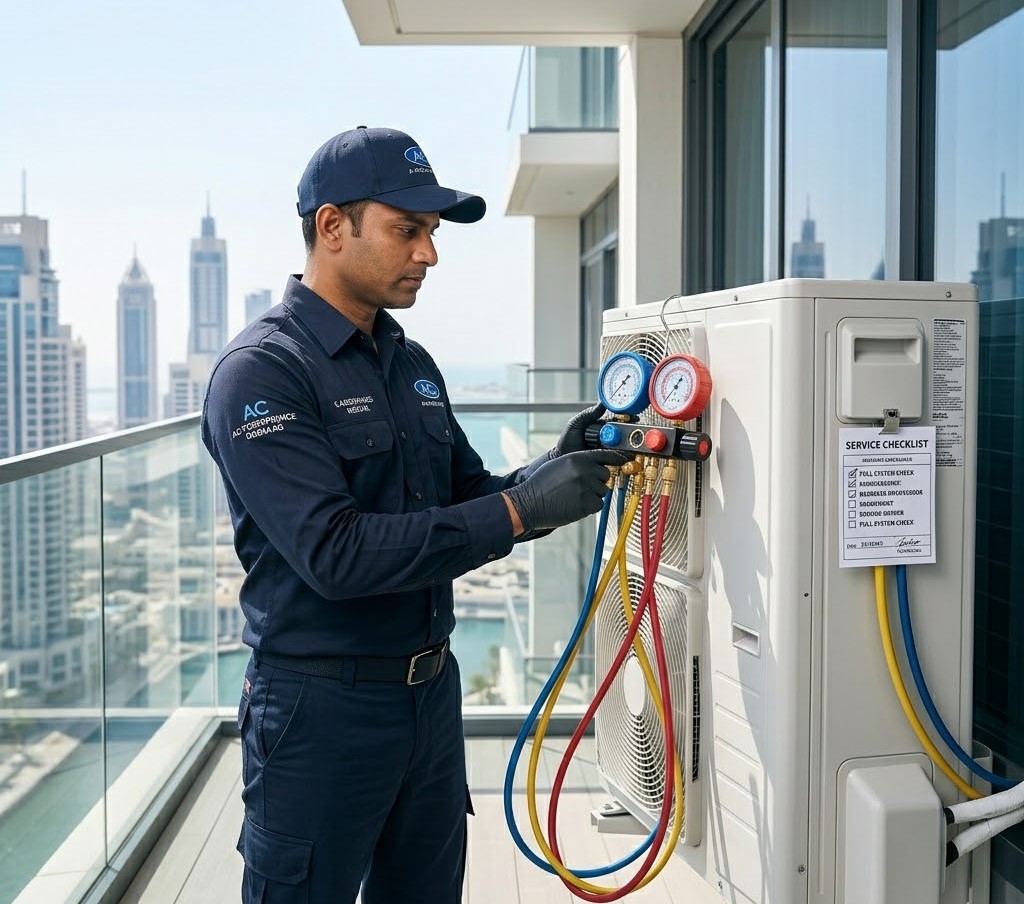
AC Repair Dubai – Diagnosing and Fixing Sudden System Breakdowns
There is a distinct timeline of panic that sets in when an air conditioning system fails in the middle of a Dubai summer afternoon. Within fifteen minutes, the ambient indoor temperature climbs. Within an hour, the concrete walls begin radiating trapped heat, humidity spikes, and your home transforms into an unlivable sauna.
When a complete failure occurs, you are dealing with a highly transactional emergency. You don’t need a lecture on future preventative care; you need an experienced technician at your doorstep with a tool bag immediately. This is the domain of AC Repair Dubai protocols.
AC Cleaning Deep Coil Cleaning Service for Better Cooling Performance
Living in Dubai offers a lifestyle defined by world-class luxury, architectural wonders, and sun-drenched days. But beneath the surface of this modern oasis lies a single, non-negotiable reality: your comfort, health, and daily life depend entirely on air conditioning.
When the summer ambient temperature soars past 45°C (113°F) and coastal humidity peaks, your AC stops being a simple home appliance. It functions as a critical, life-sustaining utility. Because our cooling systems run for thousands of hours per year under extreme environmental stress including fine desert sand, intense UV radiation, and atmospheric salinity they require a strategic approach to management.
Despite this dependency, the average resident remains completely in the dark about how their system works until it stops functioning. Suddenly, you are sweating in your living room, frantically searching for answers online. click here…
The Anatomy of an AC Emergency: Common Mechanical Failures
To protect yourself from predatory pricing and understand what is happening inside your walls, you must recognize the primary mechanical culprits behind a sudden cooling failure:
-
- Capacitor Burnout: The capacitor acts as an electrical starter motor, delivering the high-voltage jolt required to cycle on the compressor and fan motors. Because Dubai’s heat forces systems to cycle on and off continuously, capacitors operate under immense electrical strain. When they fail, your system will hum softly but refuse to blow cold air.
-
- Refrigerant Gas Leaks: Your system relies on a chemical refrigerant (such as R-410A) to absorb heat from indoor air and transport it outdoors. Structural vibrations or corrosion can create microscopic pinhole leaks in the copper coils. As gas drops below optimal levels, the system loses its cooling capacity, runs non-stop, and eventually shuts down due to low pressure.
-
- Compressor Seizure: The compressor is the literal heart of your air conditioner, pumping refrigerant between the indoor and outdoor coils. If a unit runs continuously for years without proper lubrication or coil cleaning, the compressor overheats and seizes. This is the most expensive component failure in an HVAC system.
-
- Fan Motor Failure: Your system utilizes two primary fans: an indoor blower fan to circulate conditioned air and an outdoor condenser fan to expel heat. If dirt accumulates or bearings dry out, these motors overheat, trip your electrical breakers, and halt all airflow.
Triage Checklist: What to Check Before Calling a Professional
Before you make an emergency service call, run through these three baseline checks. Quite often, what looks like a catastrophic breakdown is actually a minor operational oversight:
-
- The Thermostat Interface: If your thermostat display screen is completely blank, the system cannot signal the AC to turn on. Check if the internal batteries need replacement before assuming the system is broken.
-
- The Electrical Panel (Circuit Breakers): Because air conditioners draw massive amounts of power during peak summer, a sudden grid surge can trip the circuit breaker. Locate your home’s distribution board, find the switch labeled “AC,” flip it completely to the “Off” position, and then firmly flip it back to “On.”
-
- The Outdoor Isolator Switch: For villas, check the large weatherproof safety switch located right next to your outdoor condenser unit. It is common for house help or exterior cleaning crews to accidentally bump this switch into the “Off” position during patio washdowns.
If these elements are functioning correctly and your home continues to heat up, you are facing a genuine mechanical breakdown. Ensure the service provider you book explicitly offers rapid response times, transparent diagnostic fee structures, and written warranties on any replaced components.
2: AC Not Cooling – Troubleshooting Underperformance
Sometimes, your air conditioning system doesn’t experience a total blackout. Instead, it enters a frustrating state of sluggish underperformance. You feel air whispering from the ceiling vents, but it lacks that crisp, icy bite. The thermostat stays locked at 26°C despite being set to 22°C.
The phrase AC Not Cooling is the single most common complaint registered by residents across the UAE. Understanding the root causes of poor cooling performance will help you catch minor operational hitches before they snowball into permanent system damage.
Airflow Obstruction + Thermal Insulation = Rapid System Failure
The Top 4 Reasons Your System Has Lost Its Ice-Cold Bite
1. Choked Air Filters
This is the absolute baseline cause of cooling degradation. When your return air filters are coated in a thick felt-like layer of dust, pet dander, and fibers, it suffocates the system. Air cannot pass efficiently over the internal evaporator coils.
Without adequate air volume moving across them, the temperature of the coils drops below freezing. This causes the condensation on the coils to turn to ice, forming a literal block of ice inside your ceiling that completely seals off all airflow.
2. Caked Outdoor Condenser Coils
If you occupy a villa, your outdoor condenser units sit directly exposed to the brutal elements of the Arabian Peninsula. Dust, sandstorms, and airborne pollution coat the metallic condenser fins like an insulating blanket.
Because the outdoor unit’s sole responsibility is to dump the heat extracted from your home into the outside air, a layer of dirt prevents this heat transfer. The heat stays trapped within the refrigeration cycle, causing your indoor air to stay lukewarm while putting immense strain on your electricity consumption.
3. Miscalibrated or Poorly Positioned Thermostats
Your thermostat is the command center of your indoor climate. If its internal thermistor (temperature sensor) slips out of calibration, it will misread the actual room temperature.
Furthermore, if the thermostat is mounted in direct sunlight, near kitchen appliances, or right in the path of a drafty doorway, it will read an artificial temperature and shut down the cooling cycle long before your actual living spaces reach a comfortable climate.
4. Low Refrigerant Charge
Ac cleaning in dubai If your system is blowing room temperature air and you notice a pool of water dripping from the ceiling casing or if you see actual frost forming on the copper pipes leading to the outdoor unit your system is running low on gas.
Critical Operational Warning: If you spot ice or frost forming anywhere on your indoor or outdoor AC components, shut down the system immediately at the thermostat. Continuing to run an air conditioner with frozen coils can cause cold liquid refrigerant to flood backwards into the compressor, which will hydraulically lock and destroy the motor instantly. Let the unit thaw naturally before a technician arrives.
3: AC Maintenance Dubai – The Financial and Mechanical Power of Preventative Care
If emergency repair is the medical cure for a broken system, preventative maintenance is the vaccine.
Many Dubai residents look at AC Maintenance Dubai as an optional luxury or an unnecessary recurring expense. This mindset is a costly financial mistake. In an environment where cooling systems run at maximum capacity for eight to nine months out of the year, skipping regular maintenance is the mechanical equivalent of driving a car 50,000 kilometers without an oil change.
What Happens During a Professional AC Tune-Up?
A premium, professional maintenance visit goes infinitely deeper than washing a mesh filter under a bathroom tap. A certified HVAC specialist executes a comprehensive engineering checklist designed to optimize thermodynamic efficiency:
-
- Electrical Connection Verification: Technicians inspect and tighten all terminal connections, measure the electrical current (amperage draw) on your motors, and test the health of your capacitors to preempt unexpected electrical shorts.
-
- Refrigerant Pressure Analytics: Technicians connect manifold gauges to measure both the high side and low side pressures of your refrigerant gas. This ensures your system is operating within the manufacturer’s exact specifications avoiding the twin dangers of under charging (poor cooling) and over charging (compressor strain).
-
- Condensate Drain Line Flushing: Airborne dust mixes with moisture on your cooling coils to form a thick, gelatinous sludge in your drain pan. Technicians flush these lines using high pressure water pumps or nitrogen gas clears to prevent water backups that lead to ruined ceilings and ruined wallpaper.
-
- Mechanical Component Lubrication: Oiling fan bearings reduces friction, lowers the decibel level of your system, and reduces power consumption by ensuring the fan spins freely.
The Clear ROI of Annual Maintenance Contracts (AMCs)
For long-term property protection and absolute peace of mind, entering into an Annual Maintenance Contract (AMC) is the most logical route for property owners and tenants alike. Rather than paying expensive, unpredictable one-off fees during peak season emergencies, an AMC offers structured preventative care and priority scheduling.
| Maintenance Profile | Upfront Cost Structure | Emergency Callout Protection | System Longevity & DEWA Impact |
| Reactive Maintenance (Call only when broken) | Zero initial cost | Extremely high emergency fees; prolonged wait times during peak summer | Poor system life; 20-30% increase in monthly DEWA bills |
| Ad-Hoc Booking (Seasonal checkups) | Moderate variable costs | Standard booking rates; subject to high-season delays | Fair structural health; intermittent efficiency gains |
| Annual Maintenance Contract (AMC) | Fixed, predictable annual fee | 24/7 priority response; callouts often fully covered or heavily discounted | Maximum equipment lifespan; optimized energy efficiency and lower utility bills |
Investing in an AMC acts as an insurance policy for your indoor environment. It ensures small component degradations are intercepted and corrected before they cause a full system collapse.
4: AC Cleaning & Duct Cleaning – Protecting Your Family’s Health
Because of the intense summer heat, UAE residents spend approximately 80% to 90% of their time indoors during the hotter months. Consequently, the air inside your apartment or villa is continuously cycled through your HVAC ductwork. When you combine this closed-loop airflow with Dubai’s natural environment frequent dust storms, fine desert sand, and humid coastal winds your air ducts become an area of concern.
Over time, ultra-fine dust particles bypass basic nylon mesh filters and settle deep inside the dark, cool recesses of your internal machinery and ventilation ducts. When this airborne dust mixes with the natural condensation forming on your evaporator coils, it creates an environment for mold, fungi, and volatile bacterial colonies. This makes professional AC Cleaning Dubai and AC Duct Cleaning Dubai an absolute necessity for health and indoor air quality.
Critical Indicators That Your System Needs Immediate Deep Cleaning
Your air conditioning system will give you clear warning signs when its internal chambers have become contaminated with biological growth and dust accumulations:
-
- The Musty Odor: If you experience a sharp, sour, or musty smell the exact moment your AC cycles on, you are smelling active mold spores blooming in your internal drain pan or across the face of your evaporator coils.
-
- Black Spotting on Grilles and Vents: Take a close look up at your ceiling supply vents. If you notice dark, soot-like streaks or small black spots clustering on the louvers, mold spores are traveling through your ductwork and colonizing the metal grilles.
-
- Chronic Respiratory Irritation: If family members experience unexplained morning congestion, persistent dry coughs, watery eyes, or frequent asthma flare-ups that resolve when they leave the house, poor indoor air quality is the primary suspect.
-
- Diminished Air Velocity: If your system’s fan is set to high speed but you only feel a weak, gentle draft, your internal cooling coils or your barrel fan blower are likely choked with an accumulation of impacted dust.
The Three Tiers of Professional AC Cleansing
Understanding exactly what service you are purchasing is critical to getting the results your home requires:
-
- Standard Filter Cleaning: This is basic maintenance. The technician removes the plastic return filters, flushes them with water, wipes down the exterior decorative grill, and clears visible dust. This should be done monthly.
-
- Indoor Unit Deep Cleaning: The technician detaches the internal drain pan and decorative housing to expose the entire evaporator coil structure. They apply a specialized, eco-friendly, biodegradable coil-cleaning foam that penetrates deep into the aluminum fins, dissolving impacted grease and dirt. The barrel fan blower is then mechanically scrubbed to restore full aerodynamic velocity.
-
- Total HVAC Duct Cleaning & Sanitization: This is a comprehensive, medical-grade decontamination process for your entire home. Technicians deploy industrial duct-cleaning machines equipped with long, flexible rotating brushes and high-volume HEPA-filtered vacuums. These brushes snake through your ceiling ducts, scraping away decades of settled dust and safely vacuuming it out of your living space.
Following the physical vacuuming, a specialized fogging machine is used to mist an all-natural, non-toxic disinfectant (often based on tea tree oil or silver ions) throughout the entire system to eliminate any remaining microscopic mold spores, viruses, and bacteria.
Health Recommendation: Homeowners should schedule a full mechanical duct cleaning every two to three years. This process is also highly recommended immediately upon moving into a pre-owned property or following any interior renovation work that generated drywall or masonry dust.
5: AC Service Near Me – Leveraging Hyper-Local HVAC Expertise
When your air conditioning fails at 2:00 PM on a scorching weekday in August, you don’t care about a multinational engineering firm headquartered miles away. You care about physical proximity. You need a reliable team that optimizes for AC Service Near Me a hyper-local squad that can navigate your specific neighborhood and fix your system before your home becomes completely unlivable.
The Architectural Diversity of Dubai’s Districts
Dubai’s real estate market is incredibly unique, and different neighborhoods feature completely different cooling infrastructures. A technician who excels at fixing a villa system in one area might be entirely unequipped to manage a high-rise tower system in another.
-
- High-Rise Urban Clusters (Dubai Marina, JLT, Downtown, Business Bay): These dense districts rely heavily on District Cooling Providers (such as Empower, Semicolon, or Tab reed). Instead of traditional individual compressors, chilled water is produced at a centralized neighborhood plant and piped directly into your building. Your apartment utilizes a Fan Coil Unit (FCU) to blow indoor air across these cold water pipes. Technicians working in these towers must possess advanced expertise in balancing motorized actuator valves, flushing complex chilled water loops, and integrating building management systems (BMS).
-
- Suburban Villa Communities (Arabian Ranches, The Springs, Dubai Hills, Midriff): These expansive communities utilize independent, refrigerant-based cooling systems, such as Split AC units or large Ducted Package units mounted directly on rooftops or exterior side yards. These systems require traditional HVAC mechanical skills, including refrigerant gas handling, compressor oil testing, and weatherproofing exterior electrical components exposed to extreme desert sun and sand storms.
Checklist for Vetting a Local Service Provider
To protect your home and ensure you don’t fall victim to uncertified contractors, use this strict local vetting process before granting entry to any technician:
-
- Community Access Clearances: High-end master developments managed by companies like Emaar, Nakheel, or Dubai Properties maintain strict security gate protocols. Ensure the AC company you hire possesses the necessary public liability insurances, valid UAE trade licenses, and technician ID cards required to obtain local security permits to enter your community.
-
- Verified Local Track Record: Check their Google Business Profile for localized reviews. Look specifically for feedback from clients residing in your exact tower or community block to confirm the company understands your building’s layout.
-
- Upfront Pricing Transparency: Never allow a technician to begin dismantling your ceilings or mechanical units without a signed, written estimate detailing the diagnostic call-out fee and part replacement costs. A reputable operator will always provide clear, transparent pricing upfront.
6: Navigating Consumer Guides, Industry Myths, and Legal Realities
To round out your understanding of Dubai’s HVAC landscape, we must address the common consumer myths, everyday habits, and legal frameworks that dictate how we manage our indoor air.
The Summer Vacation Protocol: Protecting Your Home While Away
One of the biggest mistakes made by expats traveling during the summer months is turning their air conditioning completely off to save money on their DEWA bill. This is a recipe for a household disaster.
When you turn your AC off completely during July and August, the indoor temperature climbs above 40°C, and the humidity locks inside your home. When you return after several weeks, you will often find warped wooden furniture, peeling wallpaper, ruined electronics, and a pervasive layer of black mold covering your clothing and soft furnishings.
The Correct Vacation Settings:
-
- Set your thermostat to Auto mode (never leave the fan running on “On” continuously).
-
- Program the temperature to a constant 27°C or 28°C.
-
- This setting ensures the system only cycles on for a few brief intervals during the hottest parts of the day. This keeps the air moving and drops the relative humidity below 60%, completely preventing mold growth while keeping your DEWA bill minimal.
Decoding the RERA Rules: Who Pays for AC Maintenance?
A common point of friction between landlords and tenants in Dubai is deciding who is financially responsible for air conditioning costs. According to standard frameworks established by the Real Estate Regulatory Agency (RERA), the division of responsibility generally boils down to the financial scope and nature of the issue:
-
- The Tenant’s Responsibility: Minor, routine maintenance tasks are generally the tenant’s responsibility. This includes monthly filter washdowns, ad-hoc system cleaning, and minor repairs under a specific financial threshold (typically set at AED 500 in standard tenancy contracts).
-
- The Landlord’s Responsibility: Major structural repairs, capital component replacements, and systemic failures are the landlord’s responsibility. If your compressor seizes up, your evaporator coils need full structural replacement, or the entire HVAC unit requires swapping out, the financial burden falls on the landlord, provided the damage wasn’t caused by tenant negligence or a complete lack of basic cleaning.
The Myth of the 18°C Thermostat Setting
We have all done it: you walk into a warm room, grab the remote control, and frantically drop the temperature setting down to 18°C, believing it will make the air conditioner dump cold air into the room faster.
The Thermodynamic Reality: An air conditioner works at the exact same speed and output whether you set it to 18°C or 24°C. It simply delivers cold air until its internal sensors register that the room has reached the designated temperature.
By setting your thermostat to an unobtainable 18°C in the middle of summer, your compressor will never reach its target. It will run continuously without a break for hours, causing your system to overheat, freeze over, and drive your monthly DEWA electricity costs into a massive deficit. Instead, set your thermostat to a healthy, sustainable 23°C or 24°C and let the system cycle naturally.
Summary Action Plan: Your Year-Round AC Strategy
To ensure you never find yourself stuck in a mid-summer cooling emergency, convert this guide into a structured annual action plan for your household:
-
- Every Single Month: Slide out your indoor return air filters, rinse them under running tap water in your bathtub, let them air-dry completely, and slot them back into place. This single 10-minute habit reduces your system strain by up to 15%.
-
- Twice Per Year (Spring and Autumn): Schedule a professional preventative maintenance visit. Ensure the technician flushes the condensate drain line, cleans the outdoor condenser fins, and checks the electrical capacitors before the intense summer heat wave arrives.
-
- Every 2 to 3 Years: Secure a professional medical-grade AC duct cleaning and chemical sanitization to scrape out accumulated dust and eliminate any unseen mold colonies growing within your ceilings.
-
- Immediate Emergency Response: If you ever spot ice forming on your copper lines, smell burning plastic or electrical smoke, or hear grinding metal sounds, turn the system off instantly at your main breaker switch and contact a verified local emergency repair service.
By shifting your home care routine from a reactive “fix-it-when-it-breaks” mindset to a proactive, structured preventative schedule, you will maximize the operational lifespan of your cooling system, protect your family’s respiratory health, and keep your home a cool oasis against the desert sun.